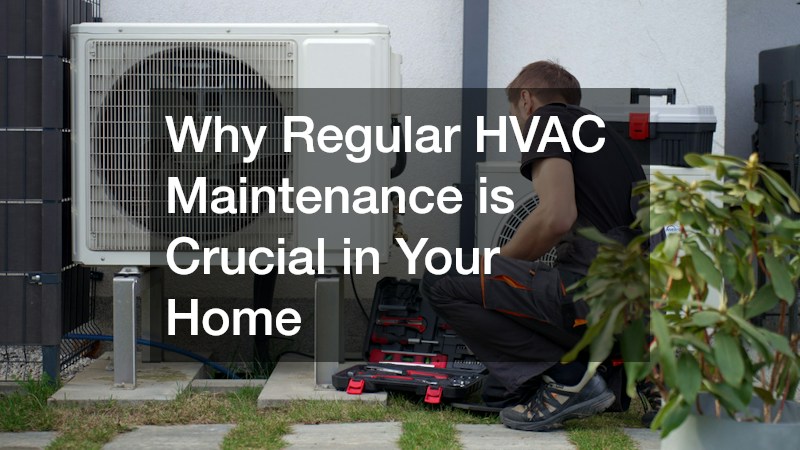
Modern residential structures are engineered to be tighter, more insulated, and more energy-efficient than at any previous point in architectural history. While these advanced building envelopes excel at retaining conditioned air and shielding living spaces from seasonal temperature extremes, they also place immense reliance on mechanical heating and cooling infrastructure. In most households, climate control hardware functions continuously in the background, operating out of sight in attics, crawlspaces, basements, and utility closets. Because the equipment turns on and off automatically in response to a wall thermostat, many homeowners treat their climate systems as self-sustaining appliances that require attention only when total mechanical breakdown leaves the house freezing or sweltering.
Treating home climate hardware with passive neglect is an exceptionally expensive approach to property management. Heating, ventilation, and air circulation equipment is not a solid-state electronic device; it is a complex, heavy-duty mechanical system that subjects electric motors, pressurized chemical refrigerants, thermal exchangers, and electrical switches to relentless physical stress. Over months of uninterrupted operation, minor issues such as fine dust accumulation, electrical resistance drift, structural vibration, and bearing friction quietly degrade system efficiency. Left uncorrected, these minor points of wear compound exponentially, forcing the equipment to work harder and consume more power while shortening its operational lifespan.
Optimizing Airflow Dynamics and Reducing Energy Consumption

At its fundamental physical level, a residential climate system does not create cold air; it absorbs thermal energy from inside the living environment, transfers that heat into a circulating chemical refrigerant, and rejects it outdoors through an exterior heat exchanger. The medium that facilitates this entire heat-exchange cycle is moving air. When airflow across the system’s internal heat exchangers becomes restricted, the fundamental thermodynamics of the machinery collapse. Even a modest reduction in cubic feet per minute (CFM) across an evaporator coil impairs thermal transfer, causing system runtimes to stretch, energy consumption to surge, and compressor temperatures to climb dangerously.
The primary point of airflow resistance in any home is the filtration barrier. As particulate matter, pet dander, lint, and airborne debris collect on the return filter, static pressure inside the supply and return plenums increases. This resistance places an abnormal mechanical load on the indoor blower motor. Variable-speed electronically commutated motors (ECM) attempt to overcome this pressure by spinning faster, which draws excessive electrical wattage and generates damaging internal motor heat. Permanent split capacitor (PSC) blower motors simply slow down under the added resistance, starving the refrigeration circuit of airflow and risking catastrophic ice accumulation across the aluminum heat-exchange fins.
Maintaining optimal airflow is especially vital when operating high-efficiency central air conditioning equipment. Modern residential systems achieve elevated Seasonal Energy Efficiency Ratio (SEER2) ratings through precision-engineered coil geometry and microchannel heat exchangers. When these compact passages become obstructed with dirt, the efficiency benefits of a high-efficiency system evaporate, driving electrical consumption up by fifteen to twenty-five percent.
Specialized ductless architectural configurations present unique airflow considerations. Installing a ductless mini split ac provides precise multi-zone temperature regulation, but its compact indoor air handlers house miniature tangential blower wheels and ultra-dense evaporator coil assemblies. Because these compact wall cassettes lack large remote plenum filters, household dust and humidity can quickly coat the cylindrical blower wheel. When dirt lodges in the curved fan blades, airflow volume drops sharply and the blower wheel slips out of balance, producing vibration noises and reducing heating and cooling output across the zone.
Diagnosing Electrical Drift and Preventing Premature Component Failure

The mechanical heart of any cooling or heat pump system is powered and regulated by an array of high-voltage electrical components. Every time your thermostat calls for cooling, electrical relays close, contactor points snap together, and heavy electrical current surges into the compressor and fan motors. While homeowners readily recognize mechanical noises, electrical failures develop silently. Over time, high amperage draw, summer heat, and line voltage spikes alter the internal chemistry and physical contact surfaces of critical electrical switches and capacitors.
A primary cause of mid-season mechanical shutdowns is the progressive degradation of motor run capacitors. Run capacitors are sealed cylindrical components filled with dielectric fluid and conductive foil plates. They store electrical energy to supply the continuous phase-shift current necessary for single-phase fan motors and compressors to run efficiently. Under intense thermal loads, the dielectric oil inside the capacitor breaks down, causing its microfarad (µF) rating to drift away from factory specifications. Once capacitance drops by more than six to ten percent, motors begin drawing excessive operating current, causing motor windings to overheat and triggering internal thermal overload switches.
Neglecting these electrical warning signs inevitably results in emergency service calls for expensive ac repairs. When a failing capacitor is ignored, the connected motor or compressor attempts to start under severe electrical strain. The resulting locked-rotor amperage quickly burns through the insulating varnish on internal motor windings, causing a direct electrical short that destroys the motor. Replacing an inexpensive run capacitor during a scheduled inspection prevents a catastrophic motor failure that costs thousands of dollars to remedy.
Early mechanical diagnosis is equally effective at catching minor component wear before it triggers structural damage. When a system begins operating with worn bronze sleeve bearings or failing ball bearings in an outdoor condenser fan, it emits subtle mechanical vibrations, squeaks, or low-frequency hums. Addressing these early indicators through timely air conditioner repair allows a technician to replace a worn motor bracket, lubricate bearing housings, or swap out an aging fan motor before the fan blade detaches, strikes the copper tubing, and vents the entire refrigerant charge into the atmosphere.
Managing Moisture Removal and Elevating Indoor Air Quality
While temperature regulation dominates public perception of climate comfort, moisture removal is an equally essential function of residential refrigeration systems. Warm indoor air holds substantial amounts of dissolved water vapor. When that warm, humid air is drawn across an indoor cooling coil operating below the dew point, the moisture condenses onto the cold metal surfaces, transitioning from a gas to a liquid. On an average humid summer day, a standard residential system extracts between five and fifteen gallons of liquid water from indoor air.
Managing this continuous volume of condensation requires an unobstructed drainage network. The liquid condensate drips from the evaporator fins into an internal drain pan, flows through a plumbing trap, and discharges out of the building envelope via PVC piping. Because this dark, damp drainage environment sits in an unconditioned attic or utility closet, it acts as an ideal breeding ground for airborne algae, bacterial slime, and fungal spores. Over several months, biological slime accumulates in the horizontal runs and P-traps of the drain line, forming a dense blockage that backs water up into the system.
Managing moisture and maintaining mechanical health also requires coordinating transitions between cooling and heating seasons. In homes utilizing dual-fuel systems, gas furnaces, or heat pump arrangements, the climate system must shift from cooling and dehumidification to winter heating. Partnering with a licensed Heating company before cold weather sets in ensures that fuel combustion chambers, burners, and venting systems operate safely. Technicians inspect gas heat exchangers for hairline cracks that could leak dangerous carbon monoxide into the airstream, test flame rectification sensors, and verify that mechanical limit switches cut power if internal temperatures rise too high.
Scheduling scheduled multi-point performance audits with a dedicated ac company ensures that seasonal transitions happen smoothly. During these pre-season checkups, certified technicians flush condensate drain passages, treat drain pans with enzymatic biocides, clear exterior exhaust lines, and balance duct pressure between living zones. Taking care of these moisture channels and filtration systems safeguards indoor air quality, protects building materials from water damage, and ensures comfortable, healthy indoor air throughout the year.
Navigating Professional Service Agreements and Diagnostic Protocols

While conscientious homeowners can handle basic tasks like replacing return air filters and clearing perimeter brush around an outdoor unit, comprehensive mechanical maintenance requires certified technicians with specialized diagnostic equipment. Modern climate systems are closed, sealed, and electronically regulated systems. Accurately assessing their operational health requires connecting digital manifold gauges, temperature thermistors, and combustion analyzers to measure real-time thermodynamic performance.
Many homeowners hesitate to invest in scheduled maintenance because they assume a professional service visit consists of a superficial walk-through and a quick filter swap. In reality, an in-depth mechanical tune-up involves an itemized technical audit designed to measure whether the equipment operates within the tight tolerances established by the manufacturer. Technicians evaluate thermodynamic subcooling and superheat levels, verify air temperature splits (Delta-T) across the cooling coil, and measure electrical draw across every active motor winding.
Enrolling in comprehensive HVAC services agreements through an established service provider offers substantial operational and financial benefits for residential homeowners:
- Scheduled semi-annual inspections—one heating tune-up in autumn and one cooling tune-up in spring—ensure the system is prepared for peak seasonal demands.
- Priority dispatch privileges guarantee rapid service during sudden seasonal heat waves or deep freezes when standard repair wait times stretch for days.
During a standard maintenance appointment, technicians provide specialized ac services that cannot be duplicated with standard household tools. Technicians apply non-acidic chemical detergents to outdoor condenser coils, lifting stubborn automotive exhaust film, oxidized metals, and impacted soil from deep within the fin packs. They connect digital temperature probes to the suction and liquid refrigerant lines, calculating exact subcooling values to verify that the system holds its precise factory refrigerant charge. Because an improper refrigerant charge degrades cooling performance and risks overheating the compressor, these precision measurements are critical for system health.
Vetting Certified Mechanical Specialists and Protecting Warranties

The mechanical longevity of your climate control hardware depends heavily on the skill and technical integrity of the technicians who service it. Residential heating and cooling equipment incorporates complex electrical circuits, combustible fuels, and high-pressure chemical refrigerants regulated by federal environmental law. Entrusting these systems to unvetted handymen or unlicensed contractors exposes homeowners to code violations, safety hazards, and poor workmanship that can shorten equipment lifespan.
When evaluating potential service providers, homeowners should look for technicians holding recognized industry credentials. Certification through North American Technician Excellence (NATE) indicates that a technician has demonstrated rigorous practical competency across heating, ventilation, air conditioning, and refrigeration disciplines. Furthermore, technicians handling refrigerants must hold active Section 608 certification from the Environmental Protection Agency (EPA), ensuring they follow proper recovery and handling procedures that prevent the unlawful venting of greenhouse gases.
Selecting an established, fully licensed ac repair company provides essential legal, structural, and financial protections for your property:
- Verified commercial general liability insurance shields homeowners from property damage or fire losses resulting from mechanical service work.
- Full statutory workers’ compensation insurance guarantees that homeowners are protected from liability if a technician suffers an injury on the property.
Hiring certified mechanical professionals is equally critical for protecting active equipment warranties. Major equipment manufacturers back their compressors, heat exchangers, and functional parts with five- to ten-year limited warranties. However, these warranty agreements contain clear protective clauses: the manufacturer requires documented evidence of annual maintenance performed by a licensed professional to validate parts claims. If a compressor suffers mechanical seizure and the homeowner cannot provide verifiable service records, the manufacturer can reject the warranty claim, leaving the homeowner responsible for thousands of dollars in replacement costs.
For complex structural upgrades, zoning redesigns, and whole-house equipment replacements, partnering with a licensed ac contractor ensures full regulatory compliance. A certified contractor pulls mandatory municipal permits, calculates accurate Manual J load calculations to size equipment to your home’s unique thermal profile, and inspects supply and return duct systems for static pressure balance. Investing in verified technical expertise ensures that your home comfort infrastructure is installed and maintained to rigid engineering standards, delivering efficient, trouble-free operation across its entire service life.
To verify the credentials and operational standards of a prospective service provider, complete these vetting steps:
- Request the company’s active state mechanical license number and verify its standing through your state licensing board’s online portal.
- Ask for a Certificate of Insurance showing active commercial general liability and statutory workers’ compensation coverage.
A home heating and cooling system represents far more than a set of mechanical appliances; it is the vital infrastructure that maintains comfort, safeguards indoor health, and protects your residence from extreme seasonal weather. The daily comfort and convenience these systems deliver are easy to take for granted, yet neglecting their mechanical and thermodynamic needs guarantees rising energy bills, frequent breakdowns, and premature equipment replacement.
By understanding the importance of unrestricted airflow, tracking electrical wear, managing condensate drainage, and scheduling comprehensive tune-ups with certified professionals, you take full control of your home’s mechanical health. Treating your climate control systems with consistent care lowers monthly utility costs, preserves equipment warranties, and shields your household budget from sudden repair expenses. Investing in regular maintenance ensures your climate systems operate smoothly, keeping your home safe, comfortable, and efficient for years to come.